
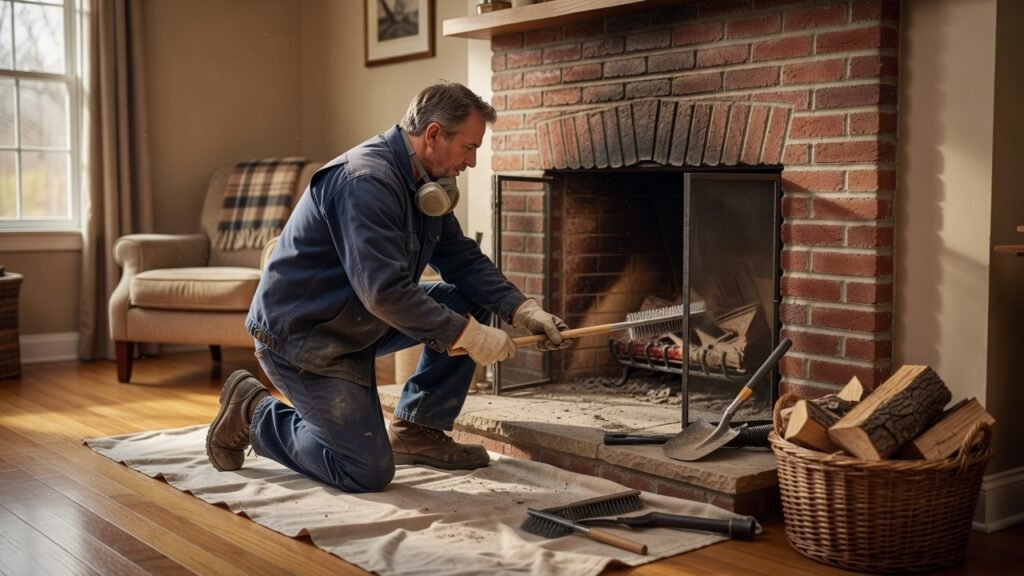
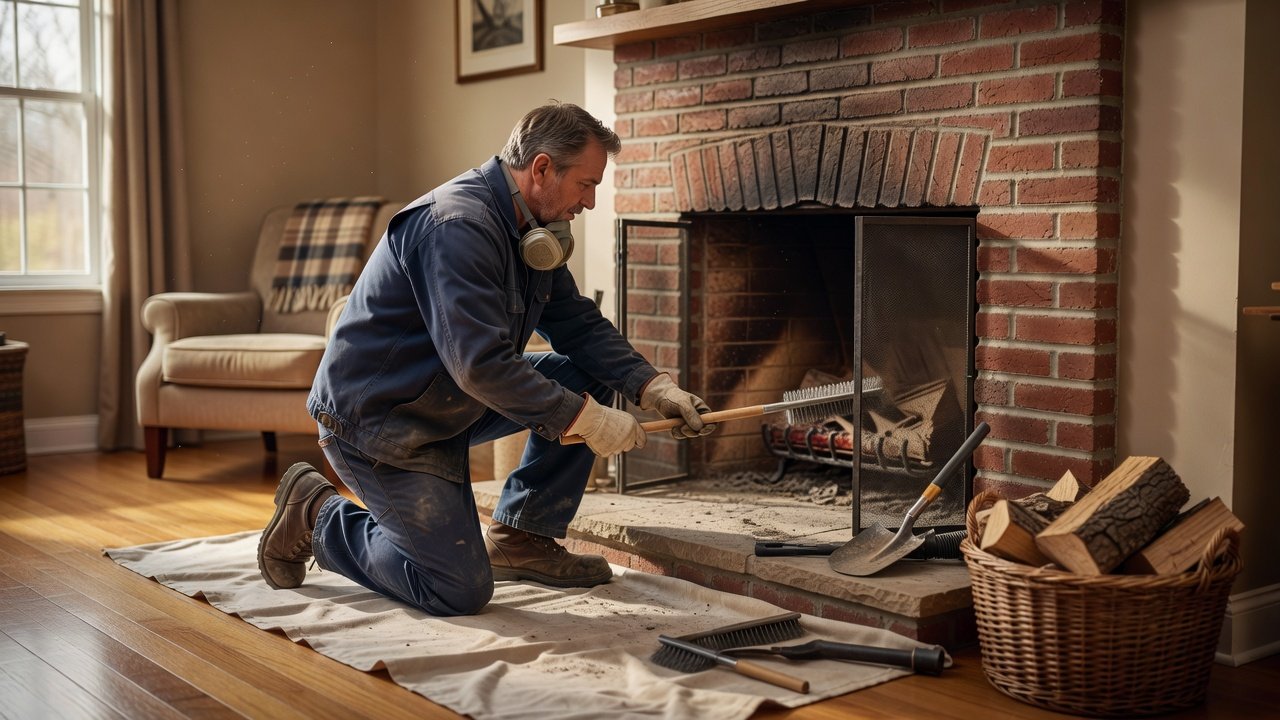
What Cranford and Fanwood Homeowners Keep Getting Wrong About Fireplace Cleaning
Most chimney problems do not start because a homeowner was careless. They often start because a homeowner was working from incomplete information. Maybe they heard that an infrequently used fireplace does not need much maintenance. Maybe they assumed a manufactured firelog cleaned the chimney. Maybe they planned to wait until they noticed smoke or an unusual smell. By the time a problem becomes obvious, however, a chimney may already need more attention than it would have required with routine maintenance. Homeowners in Cranford, Fanwood, and surrounding Union County communities can avoid many of these mistakes by understanding what fireplace cleaning does, what an inspection covers, and when professional evaluation is appropriate.
“We Don’t Use It That Often, So It Doesn’t Need Cleaning”
This is one of the most common misconceptions about fireplace maintenance. A fireplace that is used only a few times each winter may accumulate less combustion residue than one used every day, but limited use does not eliminate the need for inspection.
Creosote can form when wood smoke cools and condenses inside the chimney. The amount and type of buildup depend on factors such as the wood being burned, moisture content, combustion conditions, and chimney draft.
NFPA 211 provides for annual chimney inspections, and CSIA recommends annual inspection as part of routine chimney maintenance. An inspection can also identify problems unrelated to creosote, including obstructions, damaged components, masonry deterioration, or animal intrusion.
A chimney cap with appropriate screening can help keep animals and debris out, but it does not eliminate the need for inspection.
“I Burned a Duraflame Log, So the Chimney Is Clean”
Manufactured firelogs are not a substitute for chimney inspection and maintenance.
There is an important distinction here. Duraflame states that its firelogs produce significantly less creosote than a typical wood fire. The company also says that homeowners should have their chimney inspected annually by a certified chimney professional and cleaned when necessary.
That means burning a manufactured firelog does not give homeowners a reason to skip routine chimney maintenance.
A professional inspection can identify conditions that a firelog cannot address, including obstructions, damaged flue components, masonry problems, and other issues within the chimney system.
Homeowners should also avoid assuming that a product marketed for cleaner burning can remove existing chimney problems. If a chimney already contains significant deposits or has structural damage, it needs to be evaluated based on its actual condition.
“The Chimney Sweep Only Needs to Come If There’s a Smell or Smoke Problem”
Waiting for an obvious symptom is not a reliable maintenance strategy.
Smoke entering the living space can indicate several different problems, including inadequate draft, an obstruction, combustion issues, or a problem with the chimney or fireplace system. An unusual odor can also have multiple causes.
NFPA 211 addresses inspection and maintenance of chimneys, fireplaces, vents, and solid fuel-burning appliances because problems are not always visible during normal use.
Annual inspection is intended to identify potential problems before they become an emergency. If smoke repeatedly enters the room or you notice a new odor, unusual debris, or a change in fireplace performance, stop using the fireplace and have the system evaluated.
Routine maintenance can also be considerably simpler than addressing a chimney that has already developed a significant defect.
“Any Chimney Company Can Do This. It’s Just Sweeping”
Sweeping may look straightforward, but a professional chimney appointment involves more than putting a brush into the flue.
A proper inspection evaluates accessible portions of the chimney and fireplace system and looks for conditions that could affect safe operation. NFPA 211’s Level 1 inspection, for example, includes readily accessible portions of the chimney, fireplace, vent, connected appliance, and chimney connection.
Professional credentials can also help homeowners evaluate contractors. CSIA certification is one credential homeowners can verify when choosing a chimney professional.
When hiring a company in Cranford, Fanwood, or elsewhere in Union County, ask who will perform the work, what inspection level is being provided, whether the company carries appropriate insurance, and what documentation you will receive after the appointment.
Do not assume that a low price automatically means you are getting the same service as a more comprehensive inspection and cleaning.
“A Level 1 Inspection Covers Everything”
It does not.
NFPA 211 establishes different inspection levels because not every chimney requires the same scope of evaluation.
A Level 1 inspection is intended for situations where the chimney and connected appliance are being used under the same conditions and readily accessible portions can be examined. It is commonly associated with routine annual inspection and cleaning.
A Level 2 inspection is more extensive. It includes the Level 1 scope plus examination of accessible areas such as attics, crawl spaces, and basements when applicable. It can also include an internal examination of the flue using video scanning or another appropriate method.
Level 2 inspections are used when circumstances call for a more detailed evaluation, including certain changes to the appliance or fuel type, property sale or transfer, or an operating malfunction or external event that may have damaged the chimney.
A Level 3 inspection goes further when a suspected hazard cannot be evaluated through a Level 1 or Level 2 inspection and concealed areas need to be accessed.
The important point for Cranford and Fanwood homeowners is simple: ask the technician which inspection level is appropriate and why. A trustworthy professional should be able to explain the recommendation based on the condition and history of your chimney.
Getting Fireplace Cleaning Right in Cranford and Fanwood
Professional fireplace maintenance should begin with an evaluation of the system rather than an assumption about what it needs.
Depending on the chimney and appliance, the technician may examine accessible portions of the firebox, damper, smoke chamber, chimney connection, flue, exterior masonry, and other components. If deposits or debris are present, the appropriate cleaning method can then be determined.
The condition of the chimney matters more than how often you think you use the fireplace. A lightly used chimney can still have an obstruction or other defect that needs attention, while a frequently used chimney may require more regular cleaning depending on what is found.
If you cannot remember the last time your fireplace or chimney was professionally inspected, scheduling an evaluation before the next heating season is a sensible place to start.
Cranford Chimney serves Cranford, Fanwood, and surrounding Union County communities. Contact us to schedule an inspection and learn what your fireplace and chimney actually need before the next fire.
Related from Cranford Chimney: What Clark and Cranford Homeowners Get Wrong About Cleaning Their Fire · What Cranford Homeowners Get Wrong About Creosote Removal
Our services
Chimney Repair and Cleaning in Mountainside, NJ · Chimney Repair and Cleaning in Maplewood, NJ · Chimney Repair and Cleaning in Linden, NJ · Chimney Repair and Cleaning in Kenilworth, NJ · Chimney Services in Hillside, NJ · Chimney Repair and Cleaning in Garwood, NJ
Areas we serve
Cranford, NJ · Cranford, NJ · Cranford, NJ · Cranford, NJ · Cranford, NJ · All areas →