
What Tuckpointing Actually Costs in Cranford and Kenilworth and What Happens When You Skip It
Deteriorating mortar joints can be easy to overlook. A chimney may still look mostly intact while individual joints are beginning to crack, erode, or lose material. Homeowners in Cranford and Kenilworth may discover the problem during a chimney inspection, after noticing damaged masonry, or when moisture begins appearing around the chimney.
Tuckpointing can address deteriorated mortar joints before the damage spreads into other masonry components. The cost depends on the amount of mortar that needs to be replaced, chimney height, access, brick condition, mortar matching, and whether additional repairs are necessary. Understanding those factors can help you compare estimates and determine whether a contractor is recommending work that actually fits the condition of your chimney.
What Does Tuckpointing Cost in Cranford and Kenilworth?
There is no single reliable price for tuckpointing throughout Cranford or Kenilworth. A small repair involving accessible mortar joints can be very different from extensive work on a tall chimney with deterioration on multiple sides.
Several factors influence the final estimate:
| Factor | Lower Complexity | Higher Complexity |
|---|---|---|
| Mortar damage | Limited areas of deterioration | Extensive deterioration across multiple faces |
| Chimney height | Lower chimney with straightforward access | Taller chimney requiring additional access equipment |
| Brick condition | Brick remains generally sound | Spalling, cracking, or loose brick also needs attention |
| Mortar matching | Straightforward color and texture | Older or specialized mortar requires careful matching |
| Access | Easy working area | Steep roof or difficult access |
| Additional repairs | Mortar work only | Crown, flashing, brick, or other masonry repairs |
Because these variables can change the scope substantially, a written inspection and itemized estimate are more useful than relying on a generic local price range.
What Can Make a Tuckpointing Job More Expensive?
The Extent of Mortar Deterioration
The amount and depth of deteriorated mortar directly affect the labor involved.
A few isolated joints require less work than deterioration extending across several sides of a chimney. If the surrounding brick is also damaged, the project may involve masonry replacement in addition to repointing.
A contractor should identify the areas that require repair rather than simply providing a price based on the size of the chimney.
Chimney Height and Access
Access can have a significant effect on the labor required for masonry work.
A chimney that is easily accessible may require less setup than one located on a steep roof or several stories above ground. Depending on the property, contractors may need ladders, scaffolding, roof-access equipment, or other safety measures.
Ask whether the estimate includes the equipment and access work required to reach the damaged joints.
Brick Condition
Tuckpointing addresses mortar. It does not automatically repair damaged brick.
If bricks are cracked, badly spalled, loose, or otherwise deteriorated, they may require separate repair or replacement. A good estimate should distinguish mortar repairs from brick repairs so you understand exactly what you are paying for.
Matching the Existing Mortar
Mortar selection matters, particularly when repairing older masonry.
Historic masonry may have been constructed with mortar that differs from modern mixes. The replacement material should be compatible with the existing masonry rather than selected solely because it is strong or convenient.
For older homes, ask the contractor how they plan to evaluate the existing mortar and select a compatible replacement.
What Is Normally Involved in Tuckpointing?
The exact procedure depends on the condition of the masonry, but a typical repair involves several steps.
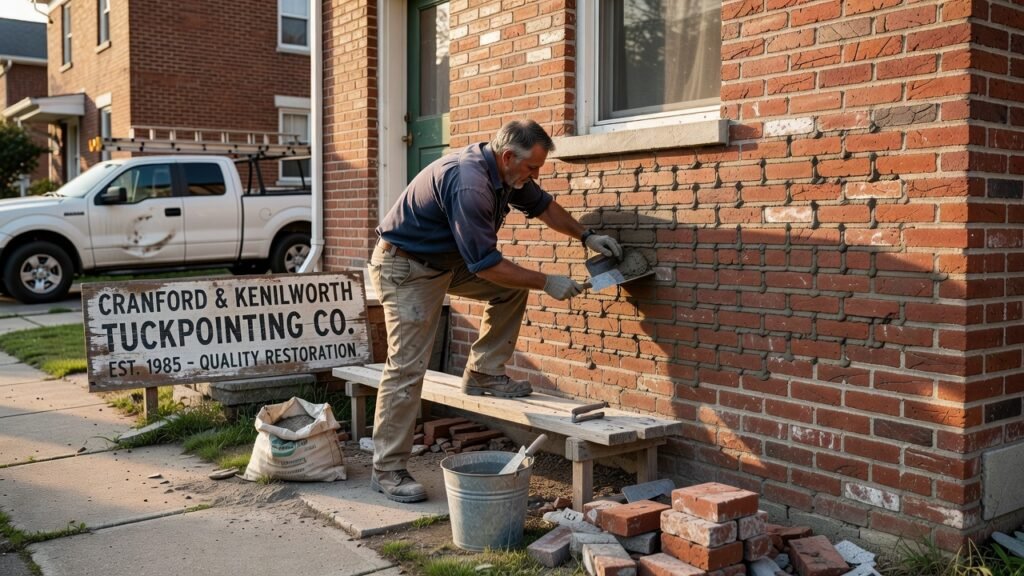
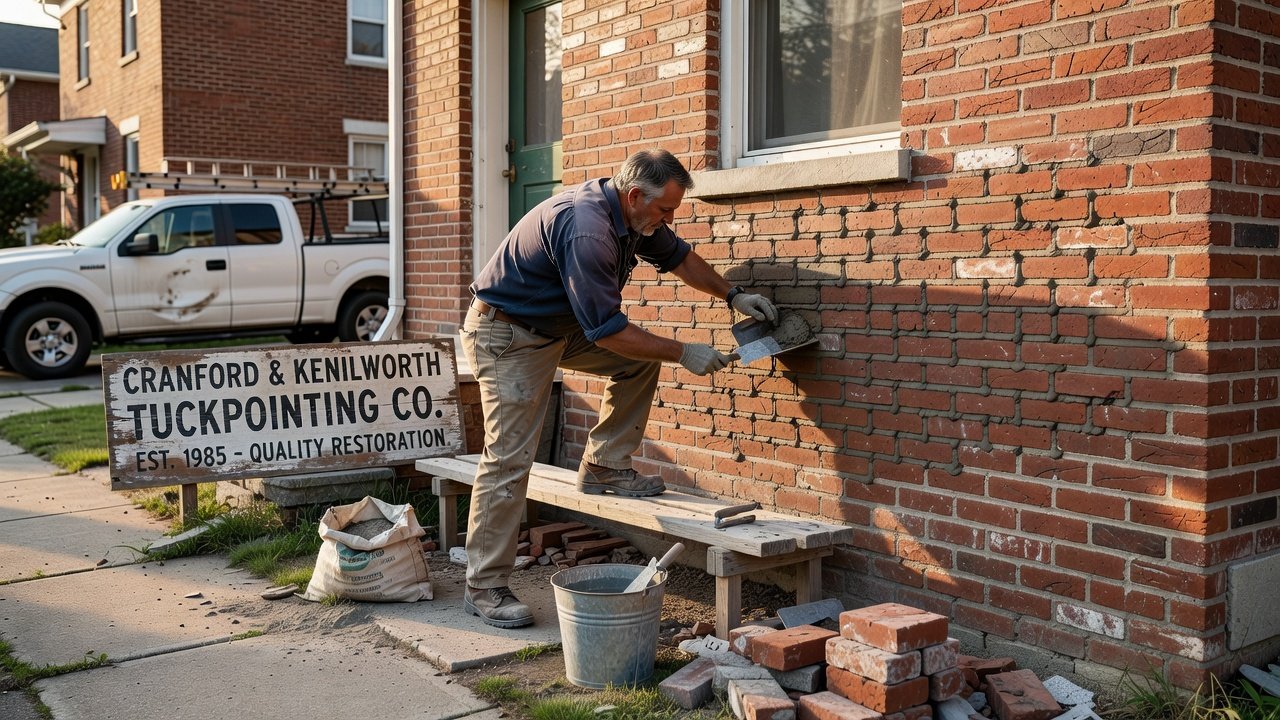
First, the deteriorated mortar is removed from the affected joints. The remaining joint surfaces are cleaned before new mortar is installed. The replacement mortar is then placed into the prepared joints and tooled to create an appropriate finished profile.
The amount of mortar removed should be determined by the condition of the existing joint. Avoid treating a specific grinding depth as a universal requirement for every chimney.
The finished repair should blend appropriately with the existing masonry while providing a sound joint between the surrounding bricks.
What May Be Additional Work?
Tuckpointing is not always the only repair a chimney needs.
An inspection may identify other problems such as:
- Cracked or deteriorated chimney crown material
- Damaged or spalling bricks
- Loose masonry
- Flashing problems
- Water intrusion
- Damaged chimney caps
- Problems requiring further evaluation inside the chimney
These items should be identified separately in the estimate.
A contractor should explain whether each recommended repair is necessary, what problem it addresses, and whether it can be completed as part of the same project.
Does a Tuckpointing Job Automatically Require a Level 2 Chimney Inspection?
No.
The appropriate inspection level depends on the circumstances. A routine Level 1 inspection may be appropriate when the chimney is being evaluated under normal conditions without significant changes to the system. A Level 2 inspection is more extensive and includes additional accessible areas of the chimney system as well as an internal examination using video scanning or a similar method when required by the inspection scope.
Tuckpointing by itself does not automatically mean that a Level 2 inspection is required.
If there are signs of damage inside the chimney, a change in appliance or fuel, a property transaction, or another circumstance that warrants a more extensive inspection, the contractor should explain why a different inspection level is appropriate.
Why You Should Not Ignore Deteriorating Mortar
Mortar joints help hold masonry together and protect the interior of the masonry assembly from moisture entry.
Once joints deteriorate, water can enter areas that were previously protected. Repeated wetting, freezing, and thawing can contribute to further masonry deterioration. Damaged mortar can also leave surrounding bricks more vulnerable to movement or deterioration.
That does not mean every small crack will turn into a major structural problem. The seriousness depends on the location, extent, and condition of the surrounding masonry.
The practical reason to address deteriorating joints early is simple. A repair limited to mortar may become more complicated if surrounding brick or other chimney components also deteriorate.
Tuckpointing Is Not the Same as Rebuilding
This distinction matters when reviewing an estimate.
Tuckpointing or repointing focuses primarily on deteriorated mortar joints.
Brick replacement addresses individual masonry units that cannot remain in service.
Masonry rebuilding involves substantially reconstructing portions of the chimney because the existing structure cannot be adequately repaired through localized mortar work.
A contractor should explain which category your chimney falls into before you agree to the work.
How to Compare Tuckpointing Estimates
Ask for a written and itemized estimate.
The estimate should identify:
- Which chimney faces require repair
- Approximately how much masonry is affected
- Whether brick replacement is included
- What mortar will be used
- How access will be provided
- Whether scaffolding or other equipment is included
- Whether crown or flashing work is included
- Whether cleanup is included
- What warranty applies to the repair
Be cautious about estimates that simply state “chimney tuckpointing” without explaining the scope.
You should also verify the contractor’s New Jersey registration when required. New Jersey’s Home Improvement Contractor Registration requirements apply to businesses performing covered residential home improvement work. The state identifies home improvement contractors as businesses involved in repairing, renovating, restoring, replacing, or otherwise improving residential or noncommercial property.
Questions to Ask Before Hiring a Contractor
Before approving the project, ask:
- Which mortar joints need repair?
- How extensive is the deterioration?
- Are any bricks damaged?
- How will the existing mortar be evaluated?
- What replacement mortar do you recommend?
- How will the chimney be accessed safely?
- Are crown or flashing repairs also necessary?
- Does the estimate include cleanup?
- What warranty is provided?
- Is your business currently registered as a New Jersey Home Improvement Contractor when registration is required?
A contractor who can clearly explain the condition of the chimney and the proposed scope gives you more useful information than a contractor who only provides a single price.
Schedule an Inspection for Your Cranford or Kenilworth Chimney
If you notice deteriorating mortar, cracked bricks, loose masonry, or signs of moisture around your chimney, do not wait for the damage to become more extensive before having it evaluated.
Homeowners in Cranford, Kenilworth, Westfield, Clark, and surrounding Union County communities can have the chimney assessed to determine whether tuckpointing is appropriate or whether another repair is needed.
Cranford Chimney can be presented here as the local service provider only if its current inspection, certification, pricing, and free-inspection claims are verified before publication. Avoid promising a “free inspection,” “no pressure,” or a specific certification unless those claims are currently documented.
The goal of a proper evaluation is not to sell the largest repair. It is to identify the actual condition of the masonry, explain the repair options, and give you enough information to make an informed decision.
Related from Cranford Chimney: Chimney Sweep in Cranford, NJ · Chimney Sweep Services in Cranford, NJ
Our services
Chimney Repair and Cleaning in Roselle Park, NJ · Chimney Repair and Cleaning in Roselle, NJ · Chimney Repair and Cleaning in Rahway, NJ · Chimney Repair and Cleaning in Mountainside, NJ · Chimney Repair and Cleaning in Maplewood, NJ · Chimney Repair and Cleaning in Linden, NJ
Areas we serve
Cranford, NJ · Cranford, NJ · Cranford, NJ · Cranford, NJ · Cranford, NJ · All areas →