
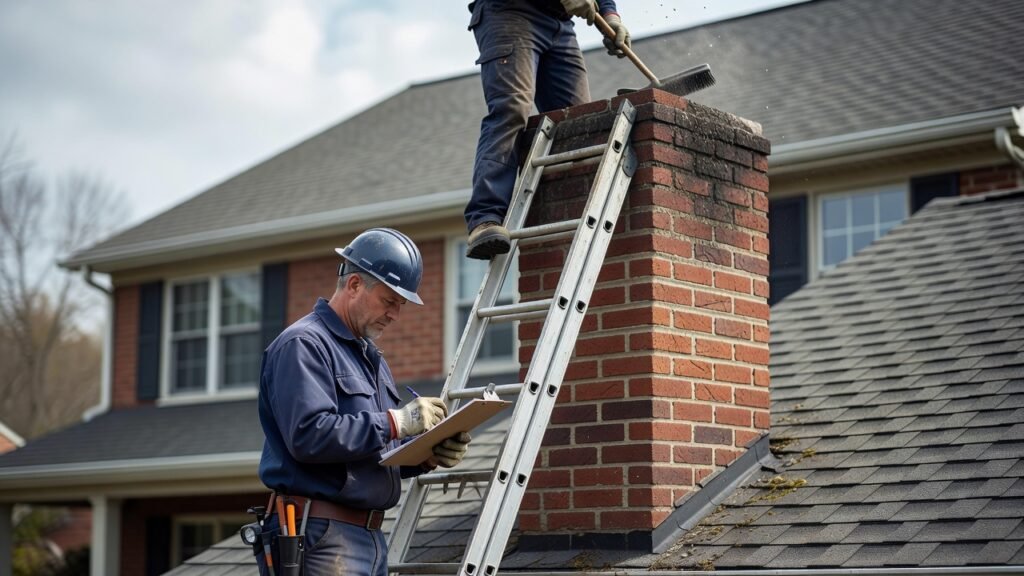
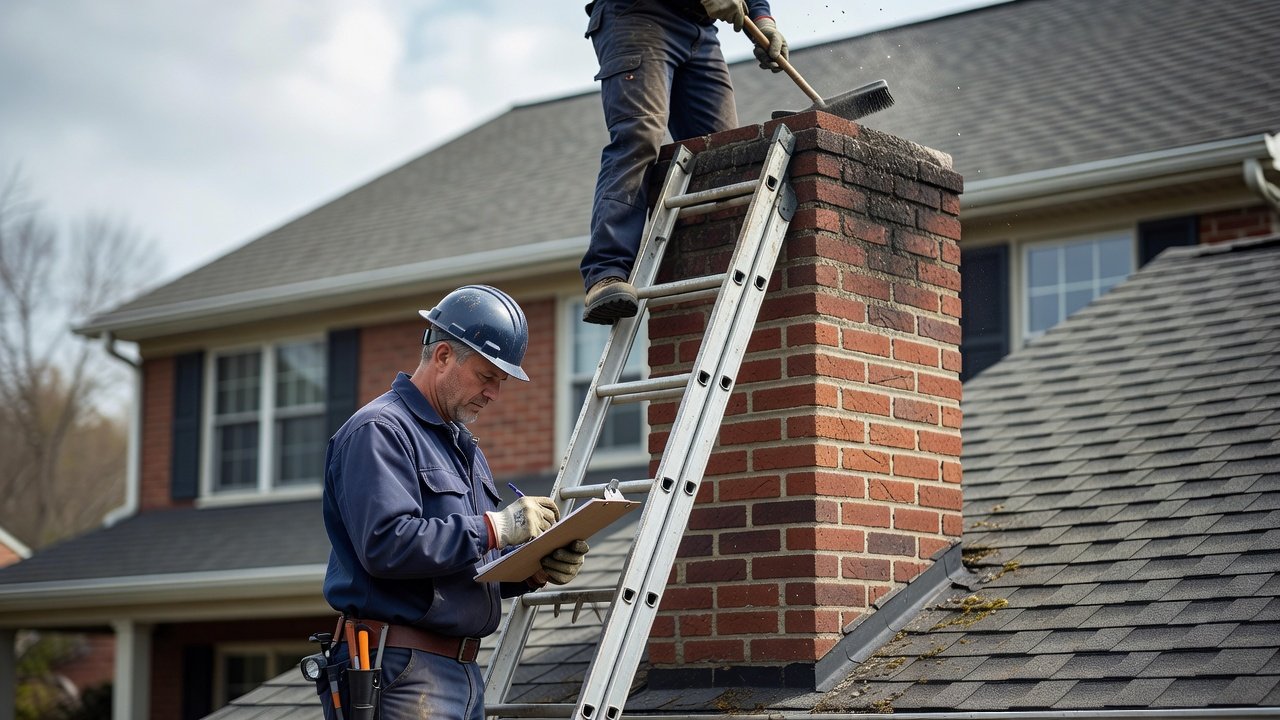
What Mountainside Homeowners Keep Getting Wrong About Annual Chimney Inspections
Most homeowners in Mountainside schedule a chimney inspection only after something goes wrong. A strange smell, smoke entering the living room, or an unusual sound from the firebox often becomes the reason for the call. By then, a problem that could have been identified earlier may already require more extensive work. Union County has many older homes, and their chimneys have experienced decades of freeze-thaw cycles, moisture exposure, and regular fireplace use. Annual inspections are intended to identify these problems before they become emergencies.
White Staining on the Outside of Your Chimney
That chalky white residue on exterior brick or mortar is called efflorescence. It develops when moisture moves through masonry and carries mineral salts toward the surface.
Simply cleaning the staining does not address the underlying moisture. Continued water penetration can contribute to spalling and deteriorating mortar joints during winter.
Call a professional now.
Mortar Joints That Look Recessed or Crumbling
Look at the mortar between the bricks on the exterior chimney. Recessed, cracked, or crumbling joints can allow additional water into the masonry.
A professional inspection can determine whether the deterioration is limited to the exterior or whether there are deeper problems within the chimney system.
Call a professional now.
A Fireplace Damper That Won’t Open or Close Fully
A damper should move properly and seat correctly. If it is corroded, stuck, or unable to close completely, it may contribute to unwanted drafts and allow outside air or debris into the fireplace.
Minor stiffness can be discussed during the next inspection. A damper that is stuck open or closed deserves more immediate attention.
Call now if it is frozen in position.
Smoke Entering the Room During a Fire
Smoke entering the living space should not be ignored. There can be several causes, including a blocked flue, an improperly sized flue, a damaged smoke chamber, or a liner problem.
Trying to guess the cause and continuing to use the fireplace can create unnecessary risk.
Stop using the fireplace and call a professional.
A Strong Fireplace Smell During Summer
A strong tar-like or campfire odor coming from an unused fireplace can indicate significant creosote buildup. Warm, humid conditions can make the smell more noticeable.
The source material notes that homeowners reporting this symptom often have not had their chimneys inspected for several years. In those circumstances, a Level 2 inspection with video scanning may be appropriate.
Call a professional rather than waiting for the next fire.
Rust on the Firebox or Damper Plate
Rust inside the firebox or on the damper can indicate moisture intrusion. Water entering the system can contribute to deterioration of the firebox, smoke shelf, and damper components.
Light surface rust can be addressed during an upcoming inspection. Heavy, flaking rust or standing water requires more immediate attention.
Call now if you find standing water or significant corrosion.
Shaling or Tile Debris in the Firebox
Thin pieces of clay or tile found inside the firebox can indicate deterioration of the flue liner. The liner helps contain combustion byproducts and heat within the chimney system.
If liner damage is suspected, the source material recommends professional evaluation before continued fireplace use. A compromised liner may require repair or relining.
Stop using the fireplace and call a professional.
Vegetation Growing Around the Crown or Cap
Plants or moss growing around the chimney crown or cap can indicate that moisture is entering through a crack or opening. Organic growth can also make an existing opening easier to overlook.
A small amount of growth may not represent an immediate emergency, but the crown and surrounding masonry should be evaluated.
The source material estimates crown repairs in Union County at approximately $400 to $900 or more, depending on chimney height and accessibility.
The Mistake That Connects All These Problems
The biggest mistake is waiting for a visible symptom before scheduling an inspection.
A routine Level 1 inspection may identify a developing problem before it requires more extensive investigation. Once damage is suspected, a Level 2 inspection with video scanning may be necessary, and repairs can become considerably more expensive.
The source material places a standard Level 1 inspection in Union County at approximately $100 to $250. It also notes that liner repairs can start around $1,500 to $3,500, depending on the system and damage.
That difference is why annual inspection matters even when the fireplace appears to be working normally.
Schedule Your Inspection in Mountainside
Cranford Chimney serves Mountainside, Westfield, Clark, Cranford, and surrounding Union County communities. If you have noticed any of the warning signs above, or simply cannot remember when your chimney was last inspected, consider scheduling an evaluation before the next heating season.
The goal is straightforward: identify what is safe, what needs attention, and what can reasonably wait.
Related from Cranford Chimney: Chimney Sweep Services in Cranford, NJ
Our services
Chimney Sweep in Cranford · Chimney Sweep in Cranford, NJ · Chimney Sweep Cranford · Chimney Sweep in Cranford, NJ Local Experts Who Know Your… · Chimney Sweep in Cranford · Chimney Inspection in Cranford, NJ
Areas we serve
Cranford, NJ · Cranford, NJ · Cranford, NJ · Cranford, NJ · Cranford, NJ · All areas →